Two dedicated production channels each run a single material. One channel runs Aluminum 6061-RAM2. The other runs Inconel 625-RAM2. That separation keeps parameters precise and consistent, and eliminates material cross-contamination.
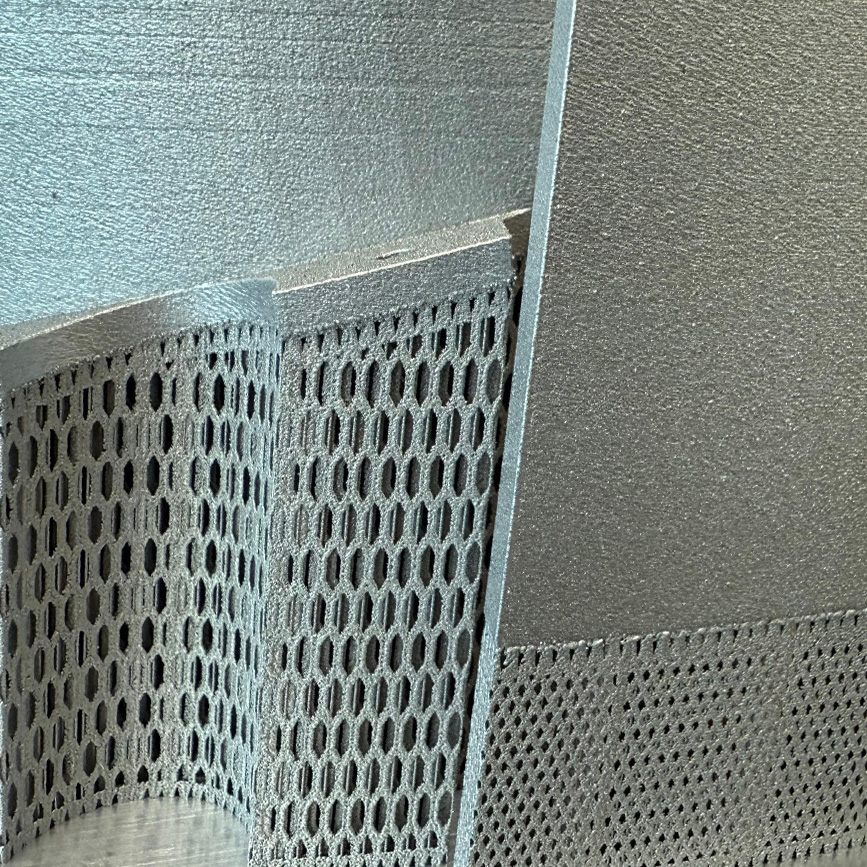
Aluminum 6061-RAM2 is a laser powder bed fusion version of 6061 aluminum, engineered to solve the hot tearing that has kept the base alloy out of most metal additive manufacturing. Standard 6061 cracks during laser fusion; RAM2's reactive additive manufacturing process controls solidification to prevent that defect, producing a crack-free, fine-grained microstructure with mechanical properties that meet, and in some cases exceed, wrought AA6061-T6. The as-printed surface finish needs no additional work, and the material prints roughly 50% faster than standard AlSi10Mg.
NASA and JPL have flight-qualified Aluminum 6061-RAM2 alongside Ti64, the first two materials approved for metal additive manufacturing on spacecraft and rover hardware under NASA-STD-6030. NASA Goddard Space Flight Center has used it on flight structures, including a bracket on the EXCITE balloon-borne telescope. NASA's RAMFIRE program used it to build a 36-inch aerospike rocket nozzle, where the weight savings improve launch vehicle performance.
A6061-RAM2 measures 48 ksi (331 MPa) ultimate tensile strength and 43 ksi (297 MPa) yield strength, both exceeding typical published values for wrought 6061-T6.
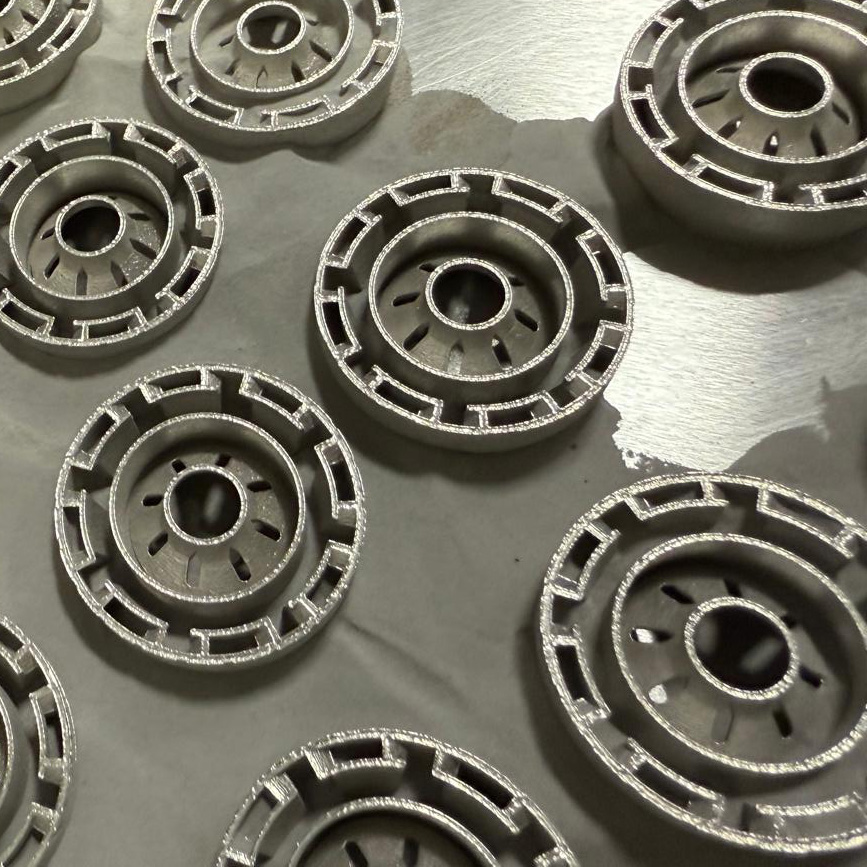
Inconel 625-RAM2 is 98% Inconel 625, with 2% reactive additive manufacturing additions that increase nucleation during solidification and add dispersion strengthening. It retains the strength and corrosion resistance that make standard Inconel 625 the material of choice for chemical processing equipment, offshore hardware, and seawater-exposed components like propeller blades and wire rope, now in a form suited to laser powder bed fusion.
Yield strength holds at 760°C, with the same oxidation and corrosion resistance as the wrought material. Builds run 57 to 61% faster than standard 40-micron layer parameters, per case studies from the material's developer, with no loss in mechanical performance.
Inconel 625 also resists thermal fatigue, the cracking that repeated heating and cooling cause in less stable alloys. It is a specified material for Navy ship exhaust systems, submarine auxiliary propulsion systems, and aircraft exhaust hardware, components that cycle through temperature on every run rather than holding steady at one.
How LPBF actually works, and the equipment both of these materials run on.
View PrintingCT scanning, mechanical testing, and metallurgical analysis for parts that need it.
View Services